
Journal
How to Store CR2032 and LR44 Coin Cells So They Don't Short
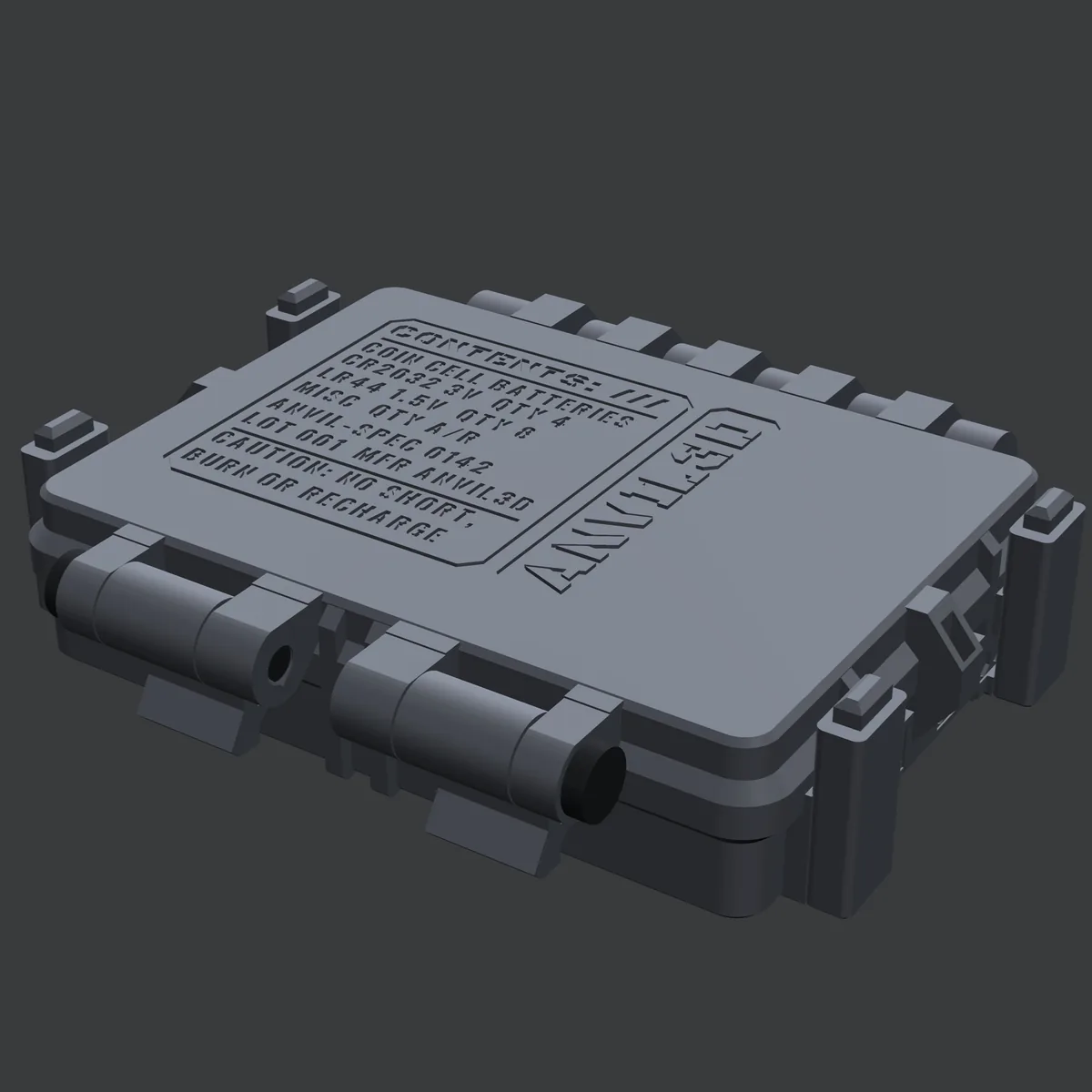
Coin cells are easy to underestimate. A CR2032 or LR44 looks harmless in the bag it shipped in, then it ends up in a drawer with keys, change and other batteries — and a few weeks later it's dead. The usual cause isn't age. It's a short.
If you keep a stash of button batteries for car remotes, scales, headlights or a first-aid kit, a little organization goes a long way. This guide covers why coin cells short, what not to do, and a simple way to store CR2032 and LR44 cells so they stay useful until you need them.
Why coin cells short in a drawer
A coin cell is a shallow metal sandwich. On a CR2032, the positive face and the negative can are close together, and the only thing keeping them apart is a thin insulator around the rim. Touch that cell to another cell, a key, a coin or a pocket knife, and you can complete a circuit. The cell drains, and it can get warm.
LR44 cells (and the alkaline equivalents often labeled AG13 or A76) have the same problem at a smaller diameter. Mix the two sizes in a bag and they nest and rattle against each other. That's a reliable way to kill a set of backups before you ever install one.
What not to do
- Don't leave them loose in a bag or bin. Metal-on-metal contact is the most common failure we see when people show us a “dead” stash.
- Don't stack bare cells. A stack of CR2032s will often short at the edges.
- Be careful with tape. A small piece of electrical tape on the positive face can help in a pinch, but cheap tape leaves residue and can pull off in a kit. It also doesn't stop cells from crushing each other.
- Don't mix chemistries in one pocket. Keep lithium CR2032s separate from alkaline LR44s, and keep used cells away from fresh ones so you don't grab a dud in the field.
What a good coin cell organizer actually does
A useful coin cell battery organizer doesn't have to be complicated. It needs three things:
- A dedicated pocket for each cell, so the cans can't touch.
- Separate rows or wells for different sizes — CR2032 is larger and thinner than LR44.
- A lid that keeps every cell in its well when the case is tossed in a bag or stacked on a bench.
If you also carry a 9V or a handful of small parts, a shallow miscellaneous bin in the same case is handy. What you don't want is one open cavity where everything slides around.
A rugged CR2032 and LR44 case
We print a latching LR44 / CR2032 coin-cell case for this job. It holds 4× CR2032 and 8× LR44 in their own pockets, plus a small misc bin that will take a 9V lying flat. Ribs in the lid keep the cells from hopping out of their wells. The case is matte black PETG, printed to order in Folsom, California, and it shares a footprint with our other Anvil3D cases so they stack.
The case is sold empty — the batteries in the photos are props — and it ships anywhere in the United States. If you also keep spare AAs and AAAs, the AA / AAA battery holder uses the same stack. The Stack Kit bundles the coin-cell case with the AA/AAA holder, the SD / microSD card case and the mini first-aid case.
A quick packing checklist
- Load fresh cells positive-side consistent in each well so you can count them at a glance.
- Keep a small “used” mark or a separate pouch for spent cells — don't drop them back in with the fresh ones.
- Store the case somewhere dry and out of direct sun. Heat shortens shelf life, even when the cells aren't shorted.
- If a cell looks bulged, stained or unusually warm, isolate it and recycle it. Don't put a damaged coin cell back in a pocket organizer.
Need a different cell count, a labeled lid or another size? Request a custom print and we'll quote it. For the standard case, you can order the coin-cell organizer on anvil3d.store.